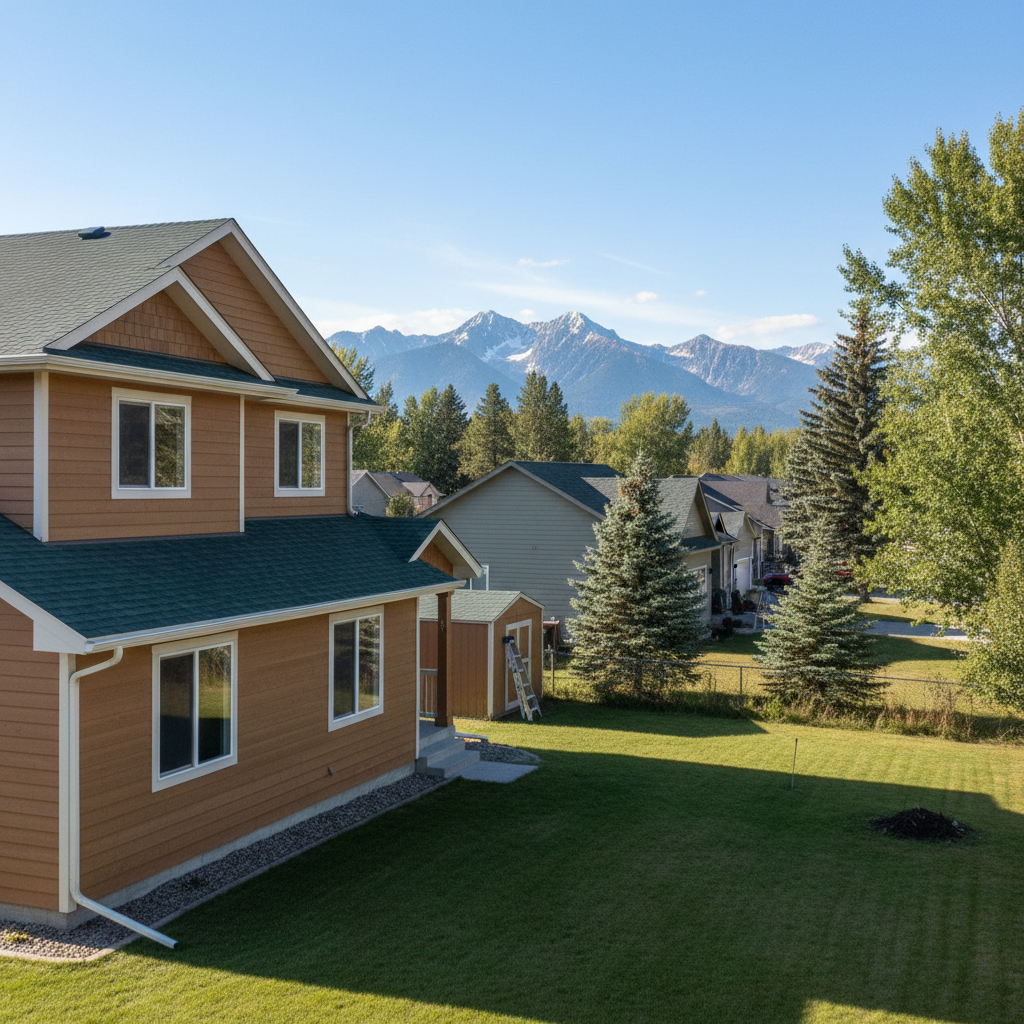
You ever look up at the edge of your roof, right where the gutters hang, and notice that flat board running along there? That's your fascia. It's not just decorative, though it certainly helps your house look finished. It's a critical piece of your home's defense, especially here in Kalispell, and when it goes bad, you've got trouble brewing.
I've seen countless homes around Flathead County, from the older places in the original Kalispell townsite to the newer builds out past the bypass, where the fascia is silently rotting away. People often don't even realize it's an issue until a gutter starts pulling away or they spot some serious peeling paint. But by then, the damage is usually more extensive than just a cosmetic fix.
What Does Fascia Even Do?
Think of your fascia board as the cap to your roof rafters. It's the trim that covers the ends of those rafters, creating a smooth, finished edge for your roofline. More importantly, it's what your gutters are typically attached to. It also plays a big part in keeping out pests – birds, squirrels, bats – from getting into your attic. And it helps protect the very structure of your roof from the elements.
Here in Kalispell, our weather is no joke. We get heavy snow loads in winter, followed by that spring melt, then sometimes torrential summer downpours. All that moisture, especially when combined with ice dams or overflowing gutters, can really take a toll on fascia. If your gutters aren't doing their job, or if they're clogged up with pine needles from those Ponderosas around town, water can back up and sit right against that fascia, soaking into the wood. That's a recipe for rot.
Signs You've Got a Fascia Problem
It's not always obvious, but if you know what to look for, you can catch it early. Here are a few things I tell folks to keep an eye on:
- Peeling or blistering paint: This is a classic sign of moisture getting into the wood. The paint can't hold on if the wood underneath is constantly wet and then drying out.
- Soft spots: If you can safely reach it, give the fascia a gentle poke with a screwdriver. If it feels soft or punky, you've got rot.
- Sagging gutters: Your gutters rely on solid fascia for support. If they're pulling away from the house or sagging in spots, it's a good bet the fascia behind them is compromised.
- Water stains: Look for stains on the siding below the fascia, or even inside your attic if the problem is severe.
- Pest activity: If you see birds trying to nest behind your gutters or hear critters in your attic, a rotten fascia board might be giving them easy access.
I've seen this a lot in older neighborhoods like the ones off Main Street, where homes have been around for decades and maybe haven't had their gutters or fascia looked at in a while. But it's not just old homes; any house with neglected gutters can run into this.
Why Local Expertise Matters for Fascia Repair
You might think,